If you’re handling oversized pallets or long loads in a warehouse, a standard pallet jack often falls short. That’s where the extended pallet jack comes in — a powerful, practical solution designed to move longer and heavier items with ease.
What Is an Extended Pallet Jack?
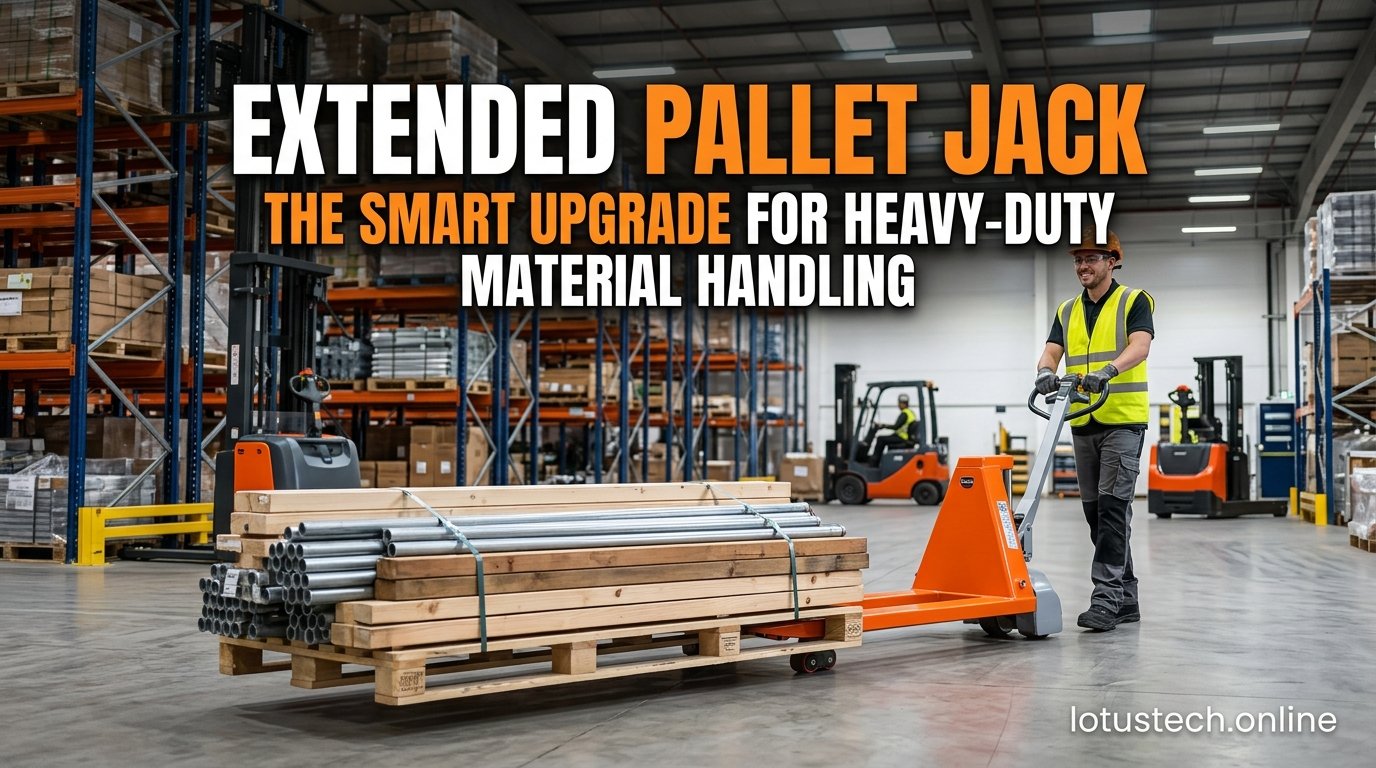
An extended pallet jack is a variation of a standard pallet jack, but with longer forks. While typical pallet jacks have fork lengths of around 48 inches, extended versions can range from 60 inches to 96 inches or more, making them ideal for:
- Oversized pallets
- Long industrial materials
- Double pallet handling
- Non-standard loads
These pallet jacks can be either manual or electric, depending on the level of automation required.
Key Benefits of Using an Extended Pallet Jack
1. Handle Larger Loads with Ease
Extended pallet jacks are designed for situations where standard equipment simply can’t reach or support the load properly.
Benefits include:
- Better load distribution
- Reduced risk of tipping
- Fewer trips needed
2. Increase Warehouse Efficiency
When you can move larger loads in a single trip, your team saves time and energy.
- Fewer movements = higher productivity
- Reduced equipment congestion
- Faster loading and unloading
3. Improve Workplace Safety
Handling long or oversized items manually can be risky. Extended pallet jacks help reduce workplace injuries by:
- Minimizing manual lifting
- Providing better load stability
- Reducing strain on workers
4. Cost-Effective Material Handling Solution
Compared to forklifts or other heavy machinery, extended pallet jacks are:
- More affordable
- Easier to maintain
- Simpler to operate
This makes them a smart investment for small to medium-sized operations.
Manual vs Electric Extended Pallet Jacks
Manual Extended Pallet Jack
Best for:
- Light to moderate workloads
- Smaller warehouses
- Budget-conscious businesses
Pros:
- Lower cost
- No battery required
- Easy maintenance
Electric Extended Pallet Jack
Best for:
- Heavy-duty operations
- Large warehouses
- Frequent use
Pros:
- Less physical effort
- Faster operation
- Higher load capacity
How to Choose the Right Extended Pallet Jack
Selecting the right pallet jack depends on your specific needs. Here are the key factors to consider:
1. Fork Length
Choose based on your load size:
- 60–72 inches: Medium extended loads
- 72–96 inches: Large or double pallets
2. Load Capacity
Most extended pallet jacks support between:
- 4,000 to 8,000 lbs
Always choose a model that exceeds your average load weight.
3. Material & Build Quality
Look for:
- Reinforced steel construction
- Durable wheels (nylon or polyurethane)
- Corrosion-resistant coating
4. Operating Environment
Consider where it will be used:
- Smooth warehouse floors → standard wheels
- Rough surfaces → heavy-duty wheels
5. Budget and ROI
Think beyond the upfront cost:
- Will it reduce labor costs?
- Will it increase productivity?
- Will it prevent damage to goods?
Common Use Cases
Extended pallet jacks are widely used in:
- Warehousing and logistics
- Manufacturing plants
- Retail distribution centers
- Construction material transport
They are especially useful for industries that handle long or bulky items like pipes, lumber, or large packaging units.
Tips for Safe Operation
To maximize safety and efficiency:
- Always balance the load evenly
- Avoid overloading beyond capacity
- Move slowly when handling long items
- Ensure clear pathways
- Train operators properly
An extended pallet jack is more than just a longer version of a standard tool — it’s a strategic upgrade for any operation dealing with oversized loads.
By improving efficiency, enhancing safety, and reducing operational costs, it becomes a valuable asset in modern material handling environments. Whether you choose a manual or electric model, investing in the right pallet jack can significantly streamline your workflow.
If you’re looking to scale your warehouse operations or improve daily productivity, this is a smart place to start.
FAQ:
1. What is the difference between a standard and extended pallet jack?
A standard pallet jack has shorter forks (around 48 inches), while an extended pallet jack has longer forks designed for larger or double pallets.
2. Can an extended pallet jack handle heavier loads?
Not necessarily heavier, but it distributes weight better across longer loads, improving stability and safety.
3. Is an electric extended pallet jack worth it?
Yes, especially for high-volume operations where reducing manual effort and increasing speed can improve efficiency.
4. What industries benefit most from extended pallet jacks?
Warehousing, logistics, manufacturing, and construction industries benefit the most due to their need to handle oversized materials.
5. How much does an extended pallet jack cost?
Prices vary depending on type and capacity, but manual models are more affordable, while electric versions cost more due to added features.
Leave a Reply