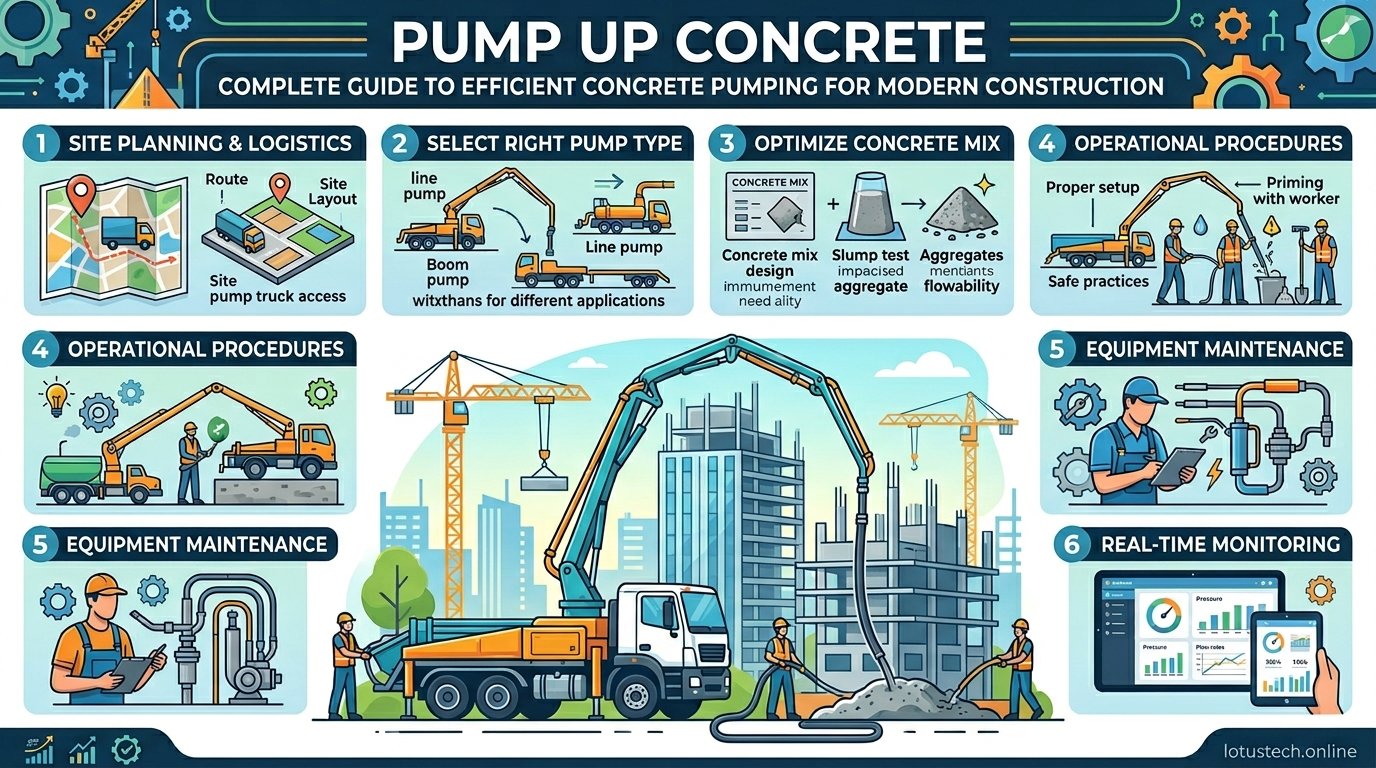
Concrete placement used to be slow, labor-intensive, and messy. Today, pump up concrete has transformed the construction industry by making the process faster, cleaner, and far more precise. Whether you’re working on a residential project or a large commercial build, understanding how concrete pumping works can save time, reduce costs, and improve overall quality.

What Does Pump Up Concrete Mean?
Pump up concrete refers to the process of using specialized equipment to transfer liquid concrete from a mixer to the desired location using a pump. Instead of manually transporting concrete with wheelbarrows or buckets, contractors use machines to pump concrete efficiently through hoses or pipes.
This method is widely used in:
- High-rise construction
- Foundations and slabs
- Bridges and infrastructure projects
- Hard-to-reach or confined areas
How Concrete Pumping Works
Concrete pumping uses a machine that pushes liquid concrete through pipes using pressure. The system typically includes:
1. Hopper
Where freshly mixed concrete is poured into the pump.
2. Pump Mechanism
Uses hydraulic pressure to move the concrete forward.
3. Pipeline or Hose
Delivers concrete directly to the placement area.
4. Placement Boom (Optional)
A robotic arm that helps place concrete precisely, especially in tall buildings.
Types of Concrete Pumps
Choosing the right type of pump is critical for efficiency and cost control.
Boom Pumps
These pumps use a robotic arm (boom) to place concrete exactly where needed.
Best for:
- Large construction sites
- High-rise buildings
- Commercial projects
Line Pumps
These use flexible hoses and are more portable.
Best for:
- Residential construction
- Sidewalks and driveways
- Smaller jobs
Key Benefits of Pumping Concrete
Concrete pumping is not just a convenience—it’s a major upgrade in construction efficiency.
Faster Project Completion
- Reduces labor time significantly
- Continuous flow speeds up pouring
Lower Labor Costs
- Fewer workers needed
- Less manual handling
Improved Accuracy
- Precise placement reduces waste
- Ideal for complex designs
Access to Difficult Areas
- Easily reaches high or narrow spaces
- Perfect for urban construction
Better Concrete Quality
- Minimizes segregation and contamination
- Ensures uniform consistency
Cost of Pumping Concrete
The cost of pump up concrete depends on several factors:
Main Cost Factors:
- Type of pump (boom or line)
- Project size and duration
- Distance and height
- Labor and setup time
Average Pricing (Estimates):
- Line pump: $100–$150 per hour
- Boom pump: $150–$300+ per hour
While pumping may seem expensive upfront, it often reduces total project costs by saving time and labor.
Best Practices for Successful Concrete Pumping
To get the most out of your concrete pumping process, follow these expert tips:
1. Use the Right Concrete Mix
- Avoid mixes that are too thick or too dry
- Ensure proper aggregate size
2. Plan the Pump Location
- Choose a stable, accessible setup area
- Minimize pipeline length if possible
3. Coordinate Delivery Timing
- Ensure continuous concrete supply
- Avoid delays that can cause blockages
4. Maintain Equipment Properly
- Clean pipelines after each use
- Regularly inspect pump components
5. Work with Experienced Operators
- Skilled operators improve efficiency and safety
- Reduces risk of errors or delays
Common Challenges and How to Avoid Them
Even with modern equipment, issues can arise. Here’s how to handle them:
Blockages in the Pipeline
Solution: Use proper mix consistency and clean equipment regularly.
Pump Wear and Tear
Solution: Schedule routine maintenance and inspections.
Delays in Concrete Supply
Solution: Coordinate closely with suppliers and plan ahead.
Safety Considerations
Concrete pumping involves heavy machinery and high pressure, so safety is essential.
Important Safety Tips:
- Always wear protective gear
- Keep a safe distance from moving parts
- Ensure proper training for operators
- Monitor pressure levels to avoid accidents
For more detailed safety guidelines, you can refer to industry standards from organizations like:
When Should You Use Concrete Pumping?
Concrete pumping is ideal when:
- The site is difficult to access
- Speed is a priority
- You need precise placement
- The project involves large volumes
For small, simple jobs, traditional methods may still be sufficient—but for most modern construction, pumping is the smarter choice.
Environmental Benefits of Concrete Pumping
Concrete pumping also contributes to more sustainable construction practices:
- Reduces material waste
- Minimizes site disruption
- Lowers fuel usage compared to manual transport
- Improves efficiency, reducing overall emissions
Pump up concrete is no longer a luxury—it’s a necessity in modern construction. It improves speed, accuracy, and safety while reducing labor costs and material waste. Whether you’re a contractor, builder, or property owner, investing in concrete pumping can significantly enhance your project’s success.
If you’re planning a construction project, consider using concrete pumping to save time, improve quality, and streamline your workflow. Have questions or experiences to share? Drop a comment and join the discussion.
FAQ:
1. What is the main advantage of concrete pumping?
The biggest advantage is speed and efficiency, allowing faster and more precise concrete placement.
2. Is concrete pumping expensive?
While the hourly cost is higher, it often reduces total project expenses by saving time and labor.
3. Can concrete be pumped to high floors?
Yes, boom pumps can deliver concrete to very high elevations, making them ideal for tall buildings.
4. What type of concrete is best for pumping?
A smooth, workable mix with proper water content and aggregate size works best.
5. Is concrete pumping safe?
Yes, when handled by trained professionals and with proper safety measures in place.